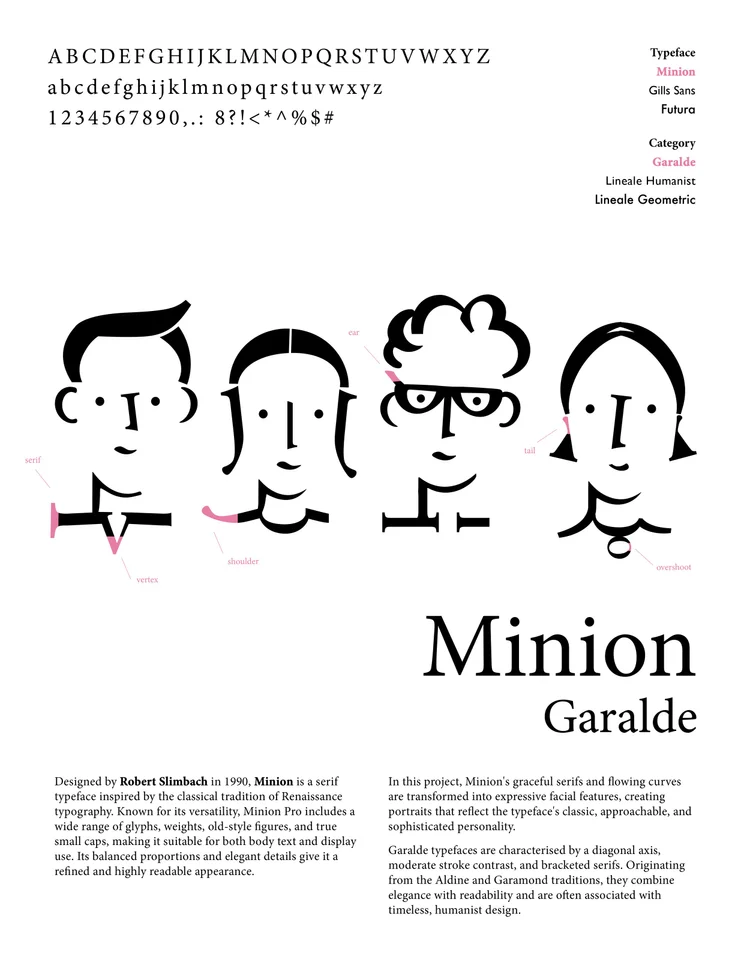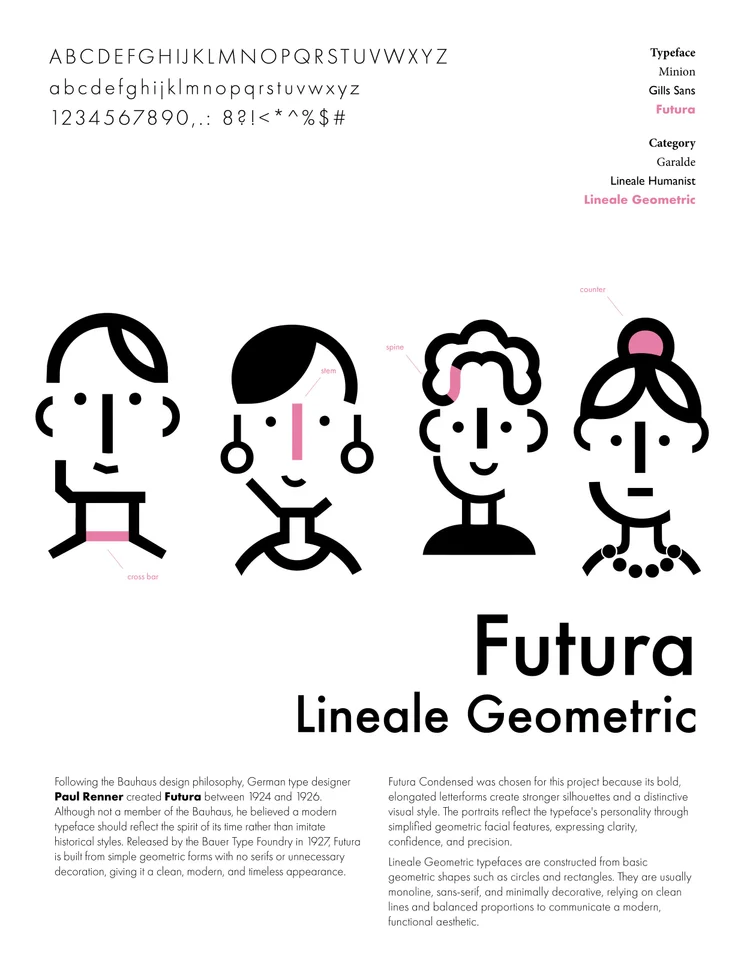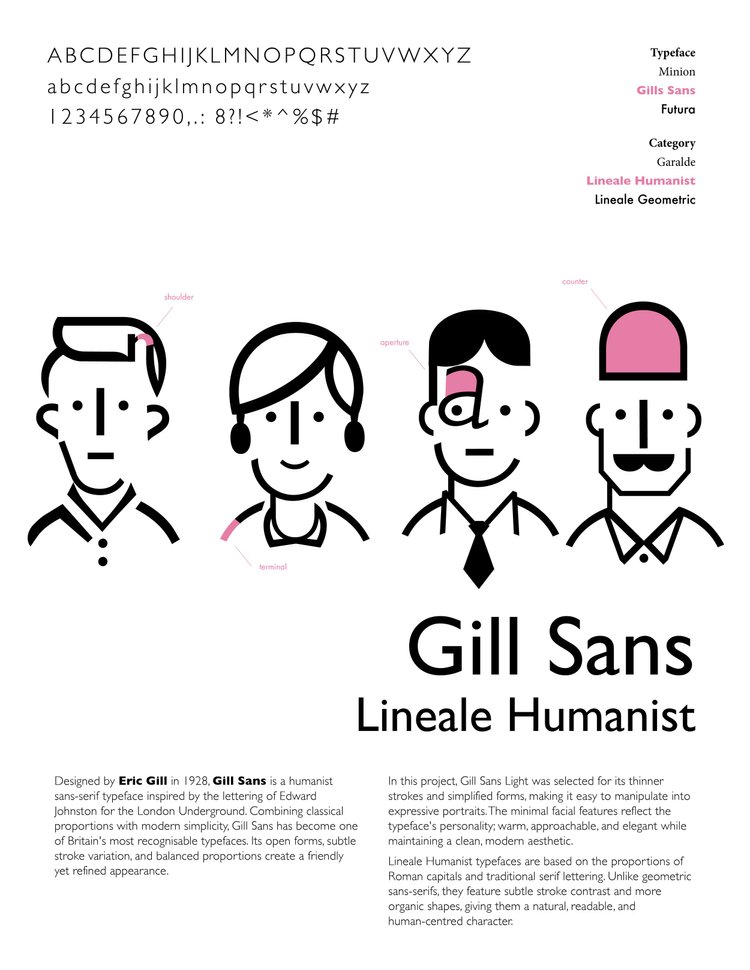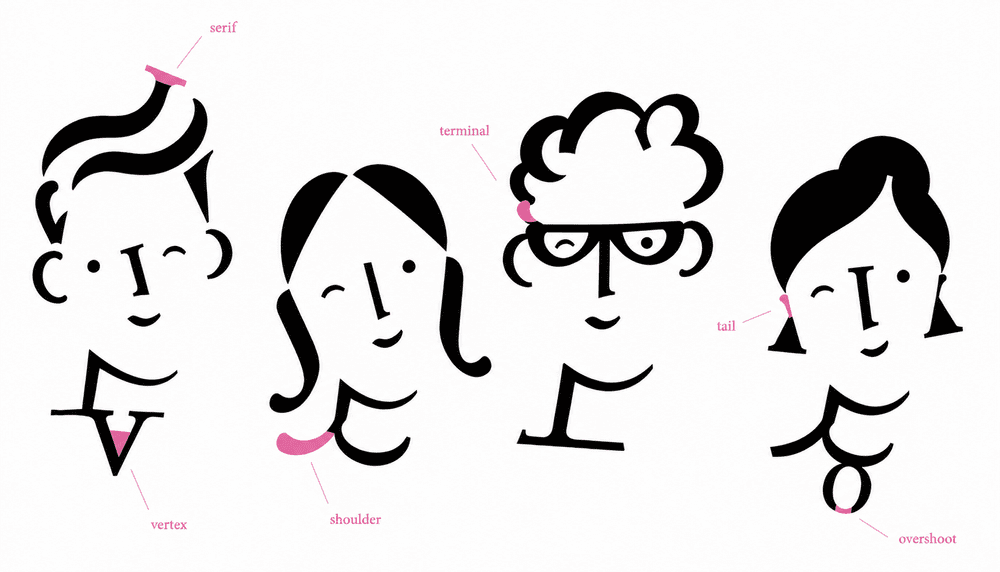
A typography teaching resource for Adobe Education Exchange, helping design educators introduce type classification through close observation.
Created as part of a teaching resource for Adobe Education Exchange, this project helps graphic design educators show students how to look closely at type. The examples focus on the small details that give letterforms their structure and character.
Typeface Anatomy
Ascender
A vertical stroke that extends upwards, over the x-height.
Descender
A vertical stroke that extends downwards, below the baseline.
Tail
The decorative curved descender of a capital Q, R and K. The descenders of the lower case g, j, p, q, and y are also sometimes called tails.
Bar
A horizontal stroke in letters like A, H, e and f.
Serif
A short line added at the beginning and the end of strokes. Serifs are what make a typeface a serif or a sans serif.
Terminal
When a letter doesn't have a serif, the end of the stroke is called a terminal.
Bowl
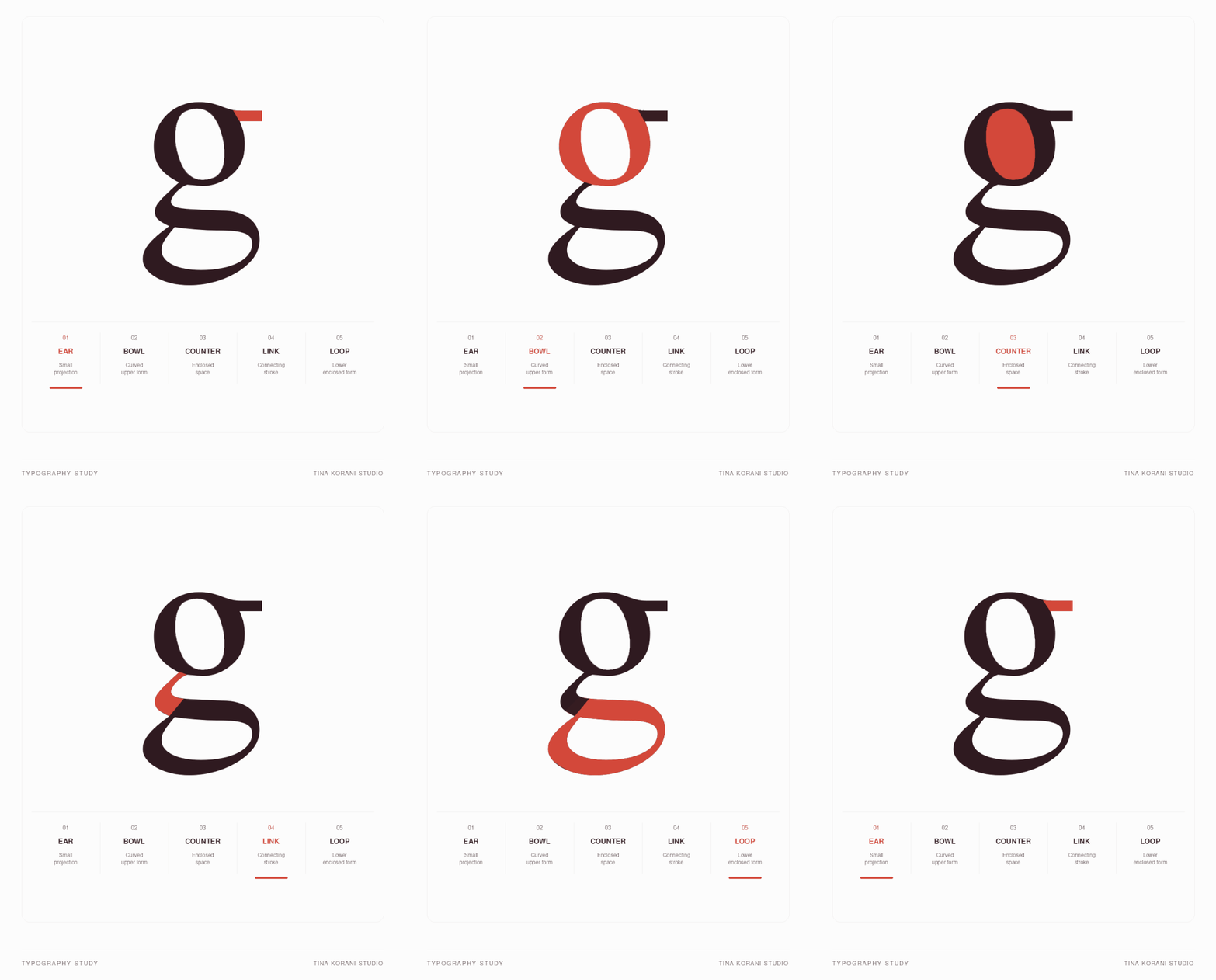
A bowl is a stroke that creates an enclosed curved space, like in the letters d, b, o, D and B.
Counter
The counter is the enclosed space in letters like o, b, d, and a. Counters are also created by bowls.
Spur
A spur is a small projection that veers off the main stroke on many capital Gs.
Stem
The main vertical stroke in upright characters. The first diagonal in "A" or "V" is also called the stem.
Leg
A portion of a letter that extends downwards, attached at one end and free at the other.
Arm
A straight or curved portion of a letter that extends upwards or outwards, attached at one end and free at the other
Ear
The small stroke that extends outwards from a lowercase g in some typeface styles.
Shoulder
The stroke that curves downwards and to the right of the lowercase h, m and n.
Spine
The spine is the main curved stroke inside the upper and lower case S.

Meet the Typefaces