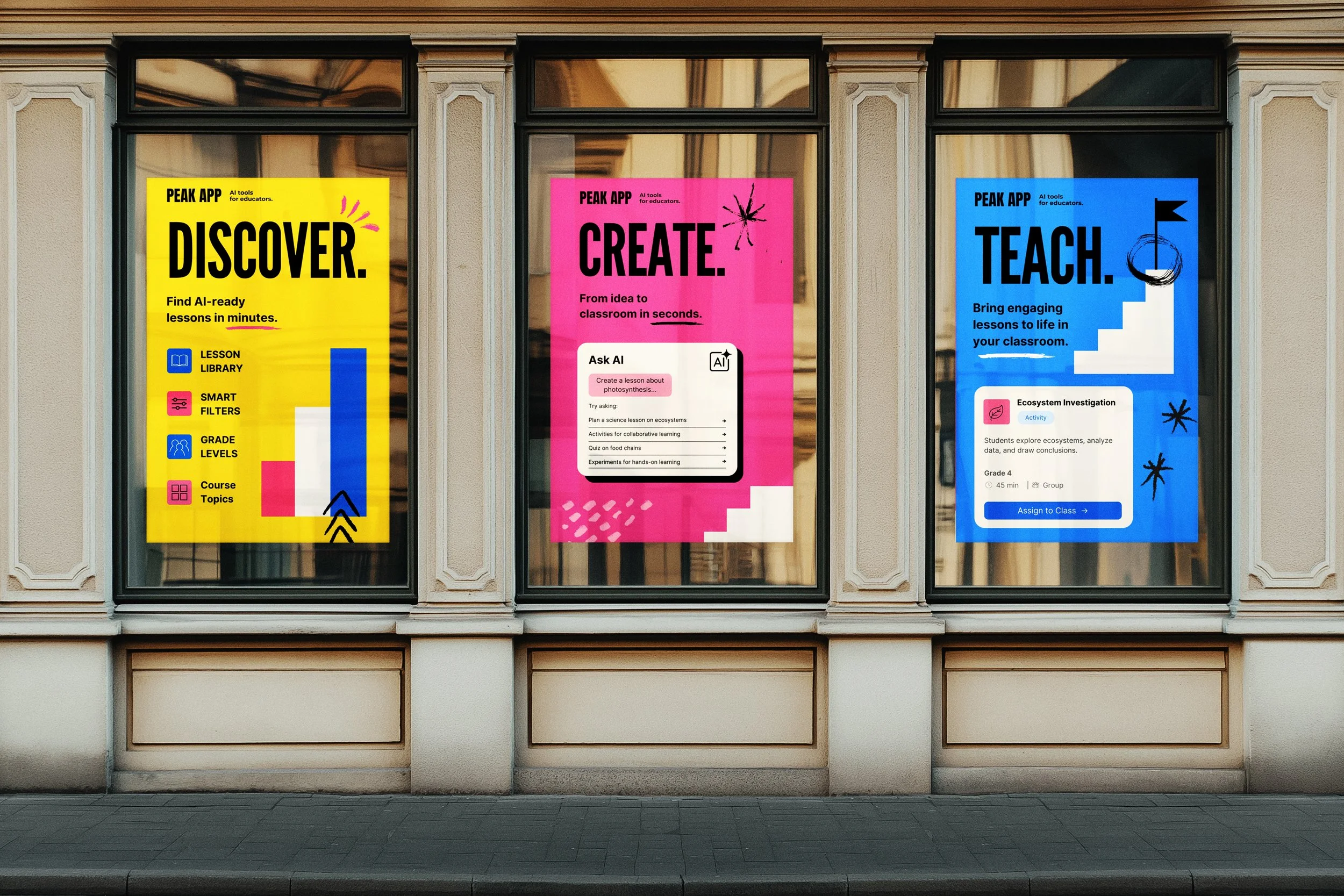
Personalized Education AI Kit. A mobile platform that makes AI tools genuinely usable for K-12 teachers, without the complexity that gets in the way.
I led end-to-end design for PEAK, an iOS app that curates standards-aligned AI curricula and builds community support around classroom AI integration. Research with 50 educators made the direction clear: teachers are curious about AI but have no time to figure it out. PEAK gives them a direct path from search to classroom in five minutes or less.
Teachers search in plain language. PEAK finds the right tool, lesson, or resource and maps it to their standards.
AI tools exist. Getting teachers to trust and use them is the harder problem.
Most AI platforms for education are built for administrators or developers, not the teacher with 30 kids in front of them and ten minutes to prep. PEAK was designed from the ground up for that teacher: fast discovery, peer-validated resources, and a clear path from idea to lesson plan.
They don't want complexity. They want trust.
Teachers who were hesitant about AI weren't opposed to it. They just didn't know what was reliable, standards-aligned, or age-appropriate. PEAK's curation model answers that question before they have to ask it.
Designed around how teachers actually work.
Classroom Adoption Viability
Confirming if a rapid, minimal-typing workflow helps teachers confidently launch prompt curricula during tight break windows.
Optimizing Prep Friction
Evaluating early template downloads to observe exactly how much Sunday lesson prep time can be eliminated via clear UI pattern curation.
Teachers don't want another complex platform. They need curated, trustworthy content with a clear path from search to classroom. That was the whole brief.
Design principle, PEAK App

Jessica Thompson
4th Grade Teacher · 8 years experience · Title I School
Goals
- Engage students who've grown up with technology
- Cut Sunday prep time from 4 hours to 1
- Meet district standards while staying innovative
- Build confidence with AI before it becomes mandatory
- Find a community of teachers actually using AI
Behaviors
- Checks phone during 20-minute lunch breaks
- Validates new tools through teacher Facebook groups
- Batch-downloads resources Sunday evenings
- Abandons tutorials longer than 5 minutes
- Screenshots everything for offline classroom use
Pain Points
- Can't tell quality AI tools from gimmicks
- Every platform needs a separate login and training
- No colleague at school using AI to learn from
- District IT blocks most new educational tools
- Worried about student data privacy and compliance
In her words
"I want to help my students with AI tools, but I don't know where to start or what's actually effective. Every Sunday I spend hours searching, but I still feel behind."
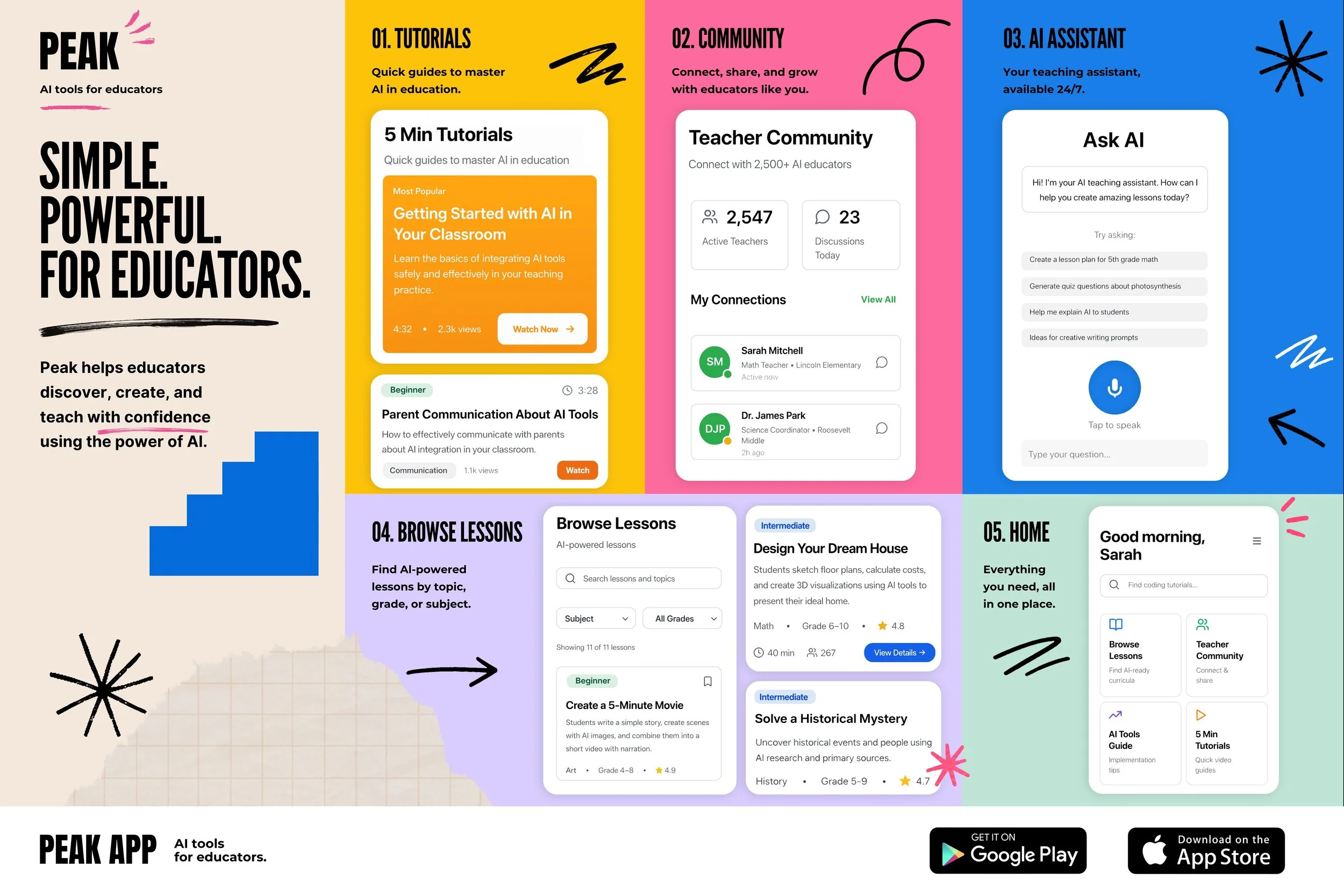
Five screens. One ecosystem.
Each screen is designed to simplify discovery, connection, and creativity for educators. From personalized dashboards to AI-powered lesson planning and tutorials.
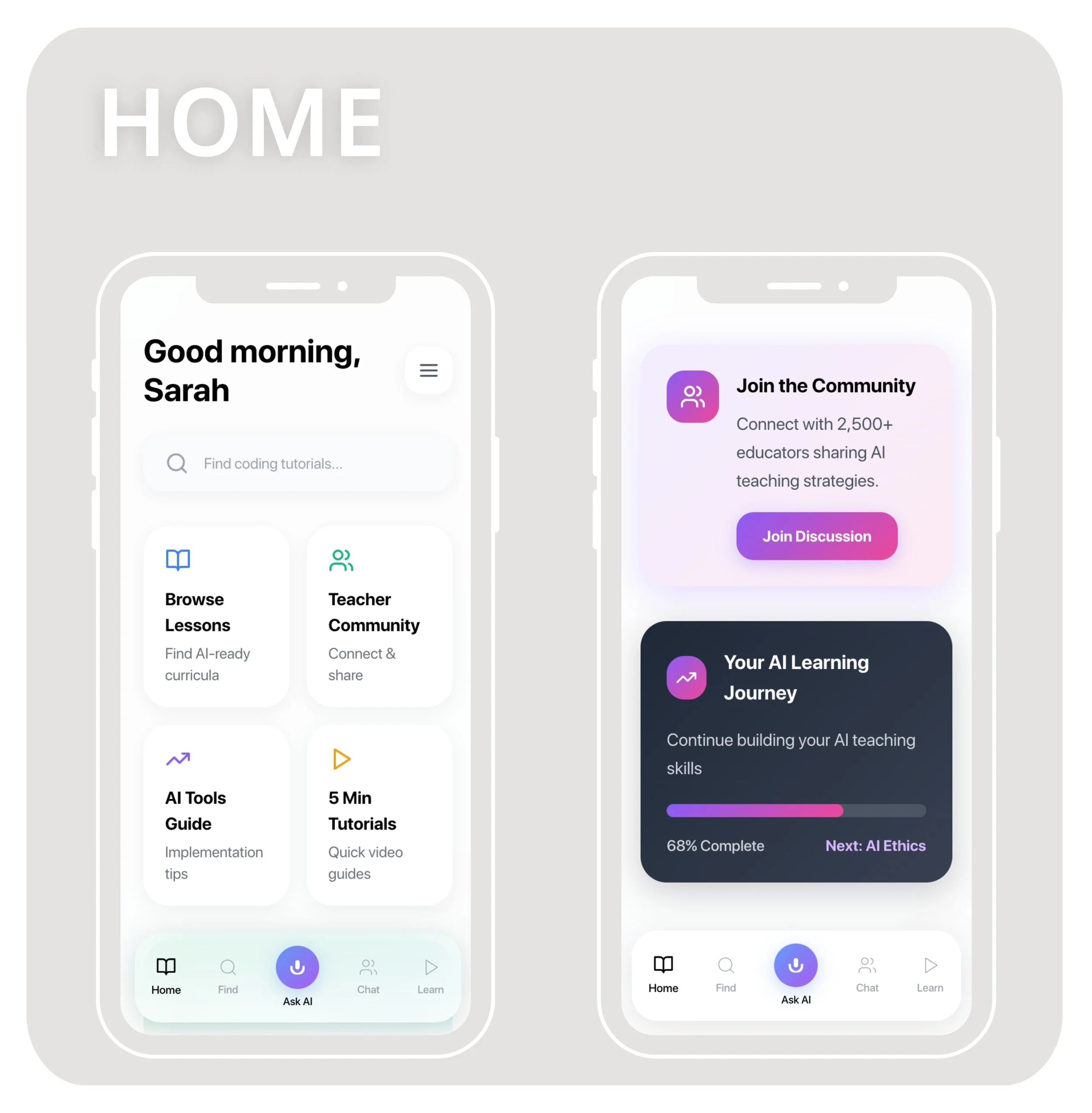
Dashboard Overview
A personalized landing screen with a greeting, search bar, and quick-access cards to Browse Lessons, Community, AI Tools, and Tutorials. It sets the tone for exploration and contextual guidance.
Progress and Highlights
Feature cards like Join the Community and Your AI Learning Journey display current milestones and next steps, reinforcing engagement through visual progress tracking.
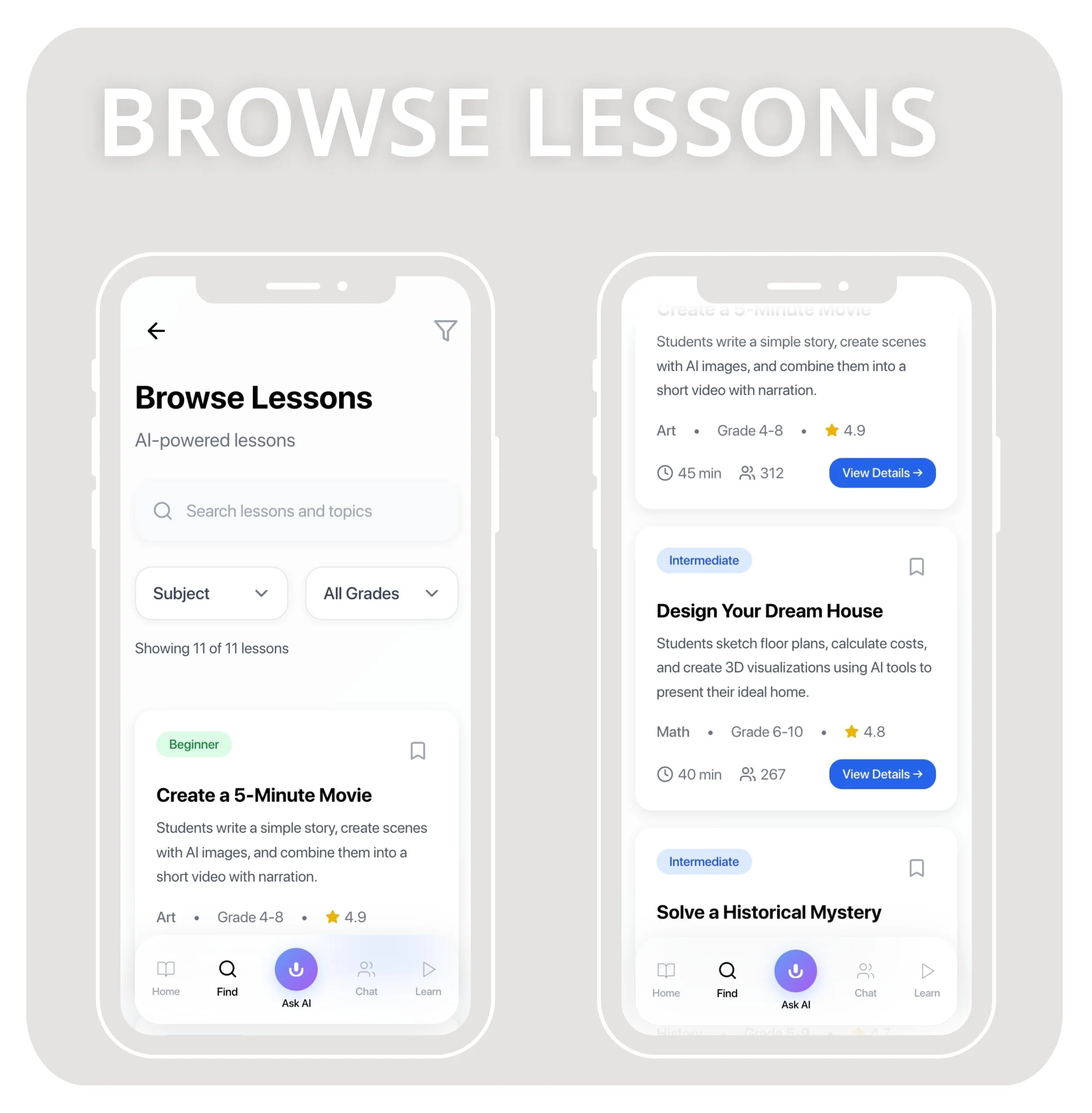
Search and Filters
AI-powered discovery with subject and grade dropdowns, search bar, and clear lesson counts. Teachers can refine content easily using responsive filtering options.
Lesson Cards Layout
Each lesson card presents difficulty level, subject, grade range, duration, users, and rating. Clean typography and compact buttons promote effortless scanning and comparison.
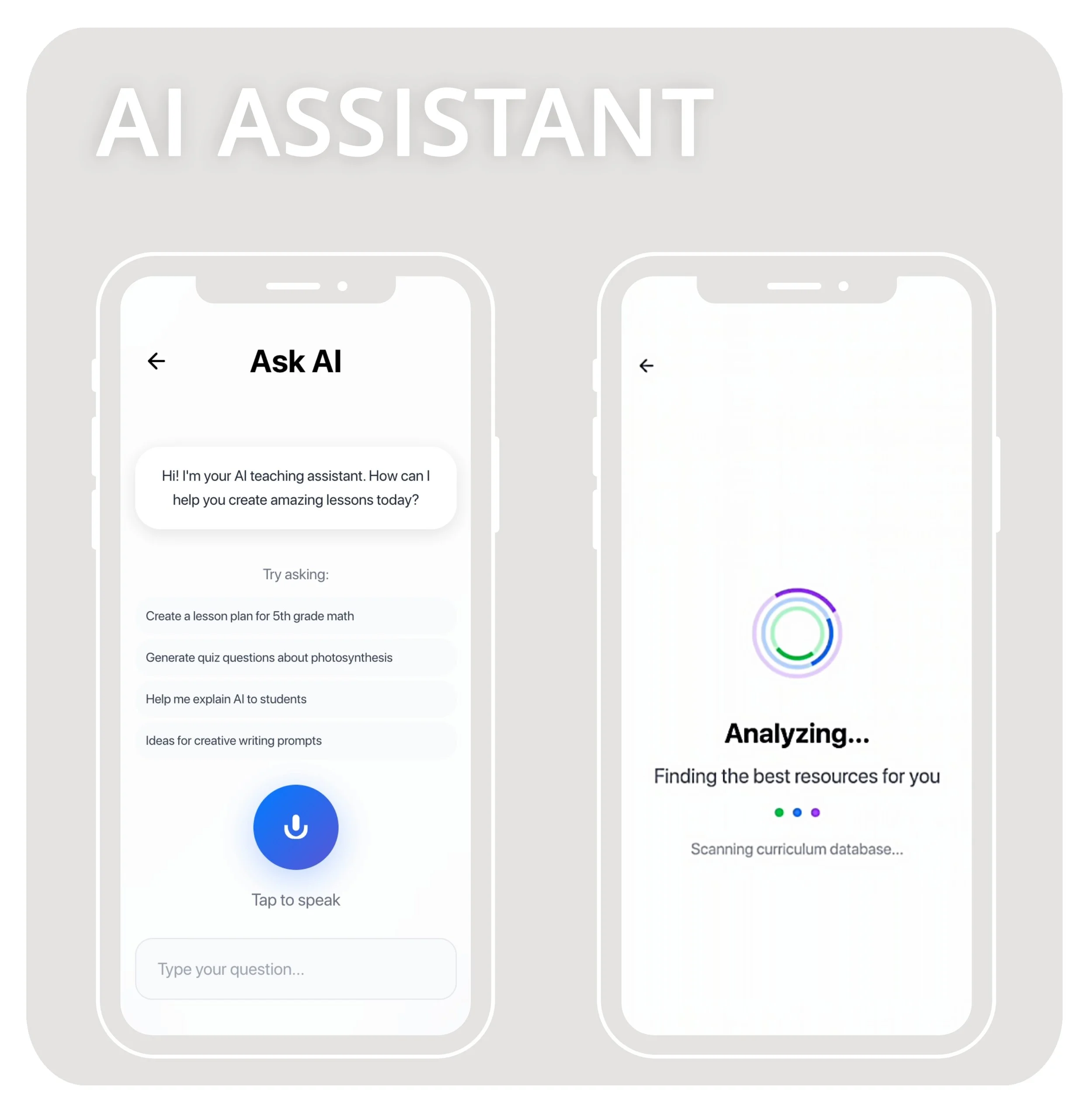
Voice Interaction
A minimalist voice-first interface for a dynamic conversational experience, designed for busy teachers who need answers without typing.
Generated Results
After analyzing the request, the AI displays curated outputs including a Recommended Lesson, an Interactive Tool, and a Custom Lesson Plan.
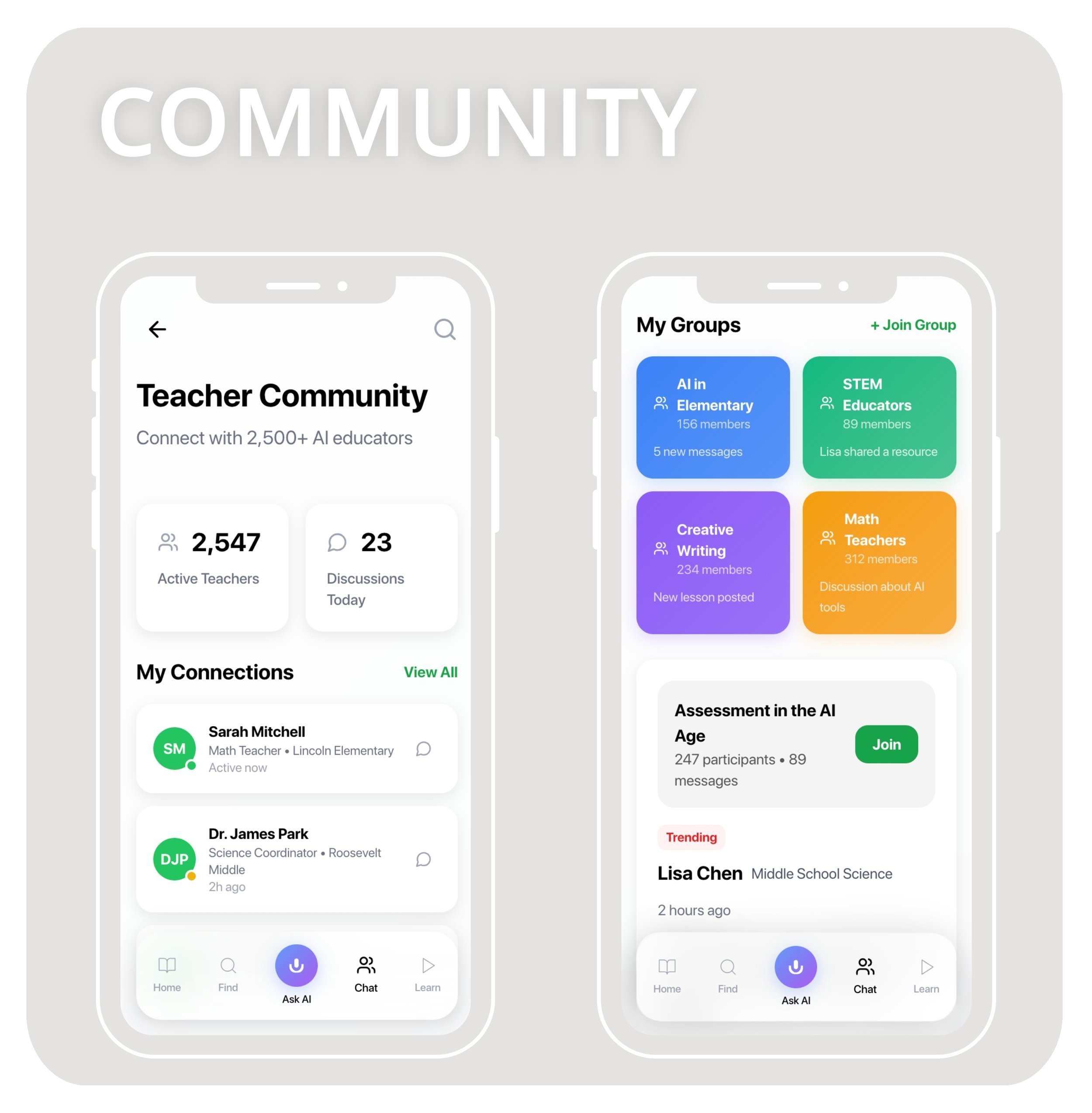
Connections and Groups
Stats on active teachers and discussions appear at the top, followed by My Connections and My Groups with tiles showing activity and member counts.
Discussions and Engagement
Featured posts like Assessment in the AI Age and trending topics highlight participation, while Join and Start Discussion buttons encourage contribution and collaboration.
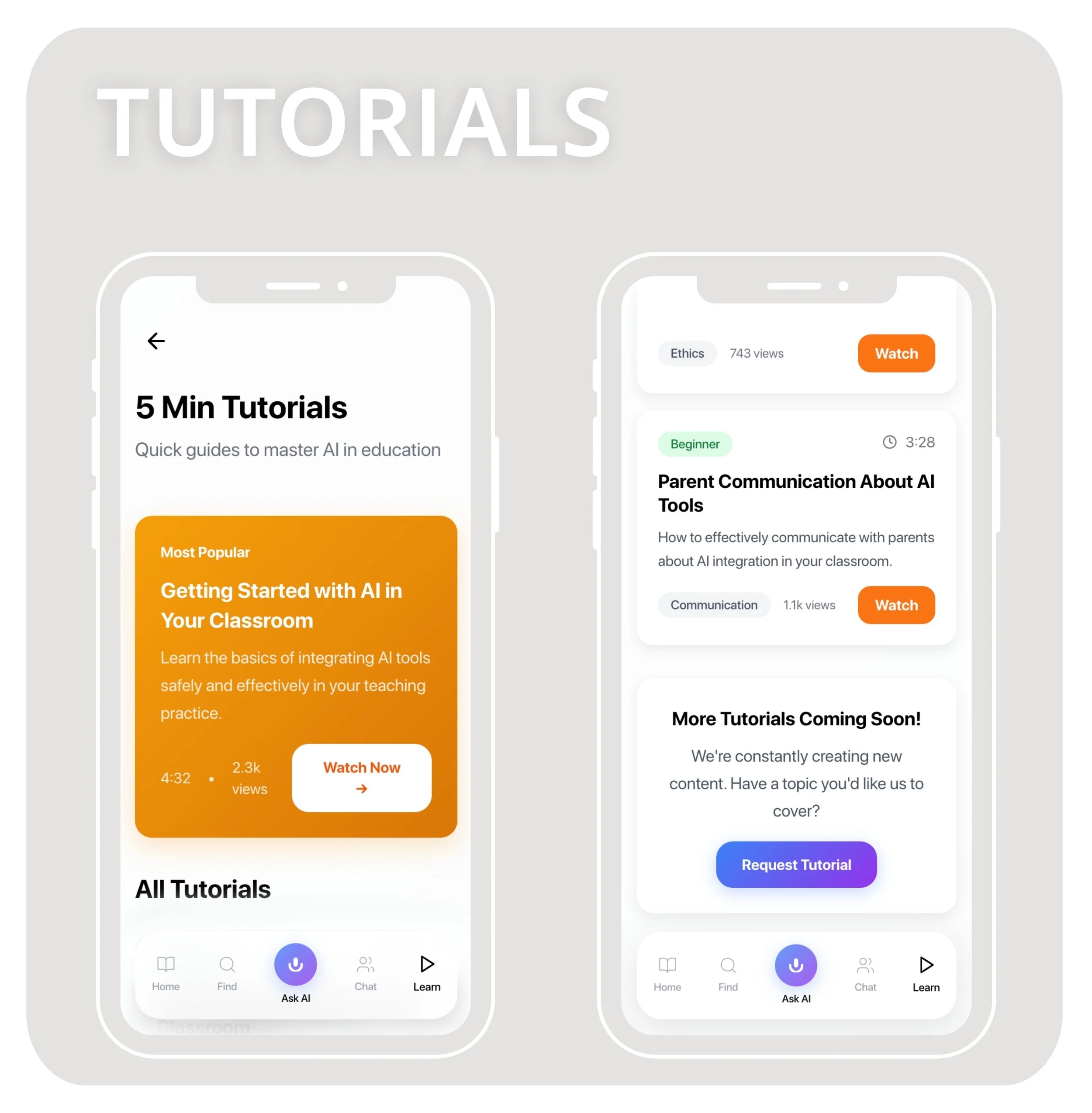
Featured Tutorial
A standout Most Popular card highlights quick guides such as Getting Started with AI in Your Classroom, with video length and view metrics for instant relevance.
Video Library
Stacked tutorial cards with badges from Beginner to Advanced, topic tags, and Watch buttons support quick structured learning. Ends with a friendly Request Tutorial call to action.
Five tabs. Tap to explore.
An early look at the flow.
This is a concept walkthrough showing the app's flow, style, and potential features. It's still evolving.
What the project taught me.
PEAK became a study in empathy, simplicity, and designing for real teachers. Meaningful design happens when technology steps back and lets people lead.
What I learned
- Design is most effective when it meets users where they are, not where you want them to be.
- Constraints are allies. Simplifying workflows reveals what actually matters.
- Human connection and clarity always outshine novelty.
Design takeaways
- Listen deeply before proposing features.
- Let the interface breathe. White space communicates trust.
- Consistent patterns and tone make teachers feel supported, not sold to.
Next steps
- Longitudinal testing to observe real classroom adoption.
- Expanded accessibility features and multilingual support.
- Grow the educator community to foster mentorship and shared creativity.